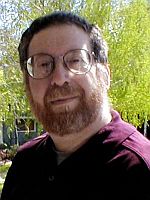
 Composer and conductor Lee Actor (b. 1952 in Denver, Colorado) was one of five composers selected in November 2014 as an "Honored Artist of the American Prize", the first time this prestigious award has been bestowed. He has won a number of awards for his compositions, most recently for Symphony No. 2, third place winner of the 2019-20 American Prize in Orchestral Composition, Dance Rhapsody, winner of the 2016 Austin Civic Orchestra Composition Competition and second place winner of the 2011 American Prize in Orchestral Composition, Redwood Fanfare, a winner of the 2009 Ridgewood Symphony Orchestra Fanfare Competition, and Concerto for Horn and Orchestra, the First Prize Winner in the 2007 International Horn Society Composition Contest. Divertimento for Small Orchestra was a finalist for the 2016 American Prize in Orchestra Composition, Concerto for Piano and Orchestra received a Special Judge's Citation for the 2015 American Prize in Orchestral Composition, Concerto for Timpani and Orchestra was a finalist for the 2014 American Prize in Orchestral Composition, String Quartet No. 1 was a finalist for the 2014 American Prize in Chamber Music Composition, Circus Symphonicus was a finalist in the Columbia Orchestra's 2013 American Composer Competition, Concerto for Alto Saxophone and Orchestra was a finalist for the 2013 American Prize in Orchestral Composition, Concerto for Violin and Orchestra was a finalist for the 2012 American Prize in Orchestral Composition, Variations and Fugue for Orchestra was a finalist in both the Columbia Orchestra's 2007 American Composer Competition and the Holyoke Civic Symphony's 2005 Composition Competition, and Prelude to a Tragedy was selected as a finalist in the Columbia Orchestra's 2005 American Composer Competition. Conductor/composer Robert Ian Winstin has written, “Lee Actor's Prelude to a Tragedy is one of the best written new works I've had the privilege to conduct or record. It is clear, precise and very tightly written. It has a style that is completely original … an incredible orchestral tour de force as written by an immensely talented composer.” The CD including Mr. Winstin’s performance of this piece with the Kiev Philharmonic was released by ERM Media in March 2005. Actor has received commissions from the Palo Alto Philharmonic, the Redwood Symphony, the Mission Chamber Orchestra, the Silicon Valley Symphony, the Saratoga Symphony, the University of South Dakota, the Skaneateles Festival, the South Bay Guitar Society, the Peninsula Symphony Orchestra, and pianist Benny Gambino. His works have been performed by more than 90 orchestras and bands in the U.S. and around the world. His first CD of orchestral works was released by MMC Recordings in June 2005, which Records International called “...one of the best new symphonic discs to have come our way.” A second CD was released by Albany Records in April 2008, featuring Concerto for Violin and Orchestra, which was nominated for 2008 “Best of the Year” classical CD by Classical 94.5/WNED in Buffalo, NY. A third CD of orchestral music, featuring Concerto for Alto Saxophone and Orchestra and Dance Rhapsody, was released in April 2011 by Navona Records, and subsequently named to Audiophile Audition’s list of “Best of the Year Discs for 2011”. Navona Records released Actor's fourth solo CD in February 2015, featuring Concerto for Piano and Orchestra and Symphony No. 3. Actor’s orchestral music is characterized by its dramatic impact and emotional expressivity, featuring a striking use of harmony, counterpoint, motivic development, and lyricism with a fresh, modern flavor. These attributes are most prominent in his large-scale dramatic works. Conductor Jason Klein has written of Symphony No. 1: “Lee Actor ... is a composer of remarkable skill whose 3-movement symphony has strength, character, and generous helpings of brilliance and humor”, and described Symphony No. 2 as “… energetic, intense, and highly polished.” In a review of Concerto for Violin and Orchestra for the San Mateo County Times, Keith Kreitman wrote: “This is a major work deserving of national attention. … This concerto verges on masterpiece”. In July 2008, Concerto for Horn and Orchestra was performed at the 40th International Horn Symposium by the Colorado Symphony and soloist Bernhard Scully, principal horn of the St. Paul Chamber Orchestra. The piece has subsequently received numerous performances, and is quickly becoming a favorite of horn players around the world. His work has been characterized by conductor Kirk Trevor as “… music of the highest quality in craftsmanship, inventiveness, and imagination.” A former violinist with the Albany (N.Y.) Symphony Orchestra, Actor has advanced degrees in both engineering, from Rensselaer Polytechnic Institute, and music composition, from San Jose State University. He has studied composition with Donald Sur, Brent Heisinger, Charles Jones, and Andrew Imbrie, and conducting with Angelo Frascarelli, David Epstein and Higo Harada. Actor was named Composer-in-Residence of the Palo Alto Philharmonic in 2002, following his appointment as Assistant Conductor in 2001, and was Assistant Conductor of the Nova Vista Symphony from 2008 to 2010. He is a member of ASCAP®, who recently named Actor the recipient of an ASCAPlus award for the 17th time. He has received awards and grants from ASCAP, the American Music Center, the International Horn Society, the Ridgewood Symphony Orchestra, and The American Prize in Composition. |